The global business landscape is in a state of unprecedented flux. The rapid adoption of artificial intelligence is no longer a slow evolution but a seismic shift, reshaping industries and demanding a fundamental rethinking of how organizations manage their most critical asset: their people. In this new reality, traditional, reactive approaches to talent management are no longer a viable option; they are a significant liability.
The evidence is clear: businesses that do not link their workforce strategy with the same rigor they apply to financial planning risk falling behind in agility, costs, and talent. In this guide, we’ll break down how to institutionalize workforce planning as a core business discipline and build an agile, future-proof organization.
The New Calculus of Work: Augmentation Over Automation
The impact of AI on the workforce is not a gradual, linear change but a rapid, accelerating, and systemic transformation. Data from 2024 indicates a significant increase in AI adoption: 75% of surveyed workers were using AI, with nearly half (46%) beginning to do so within the past six months.
However, the proliferation of AI is also a source of significant disruption. Research from McKinsey suggests that by 2030, AI could automate up to 30% of work hours in the U.S. economy, especially in routine data and knowledge tasks. At the same time, this is creating an urgent need for human teams to focus on higher-value activities like strategy, innovation, and ethical oversight. This is a critical distinction that reframes the conversation around AI’s value from one of simple cost-cutting to one of geometric productivity growth.
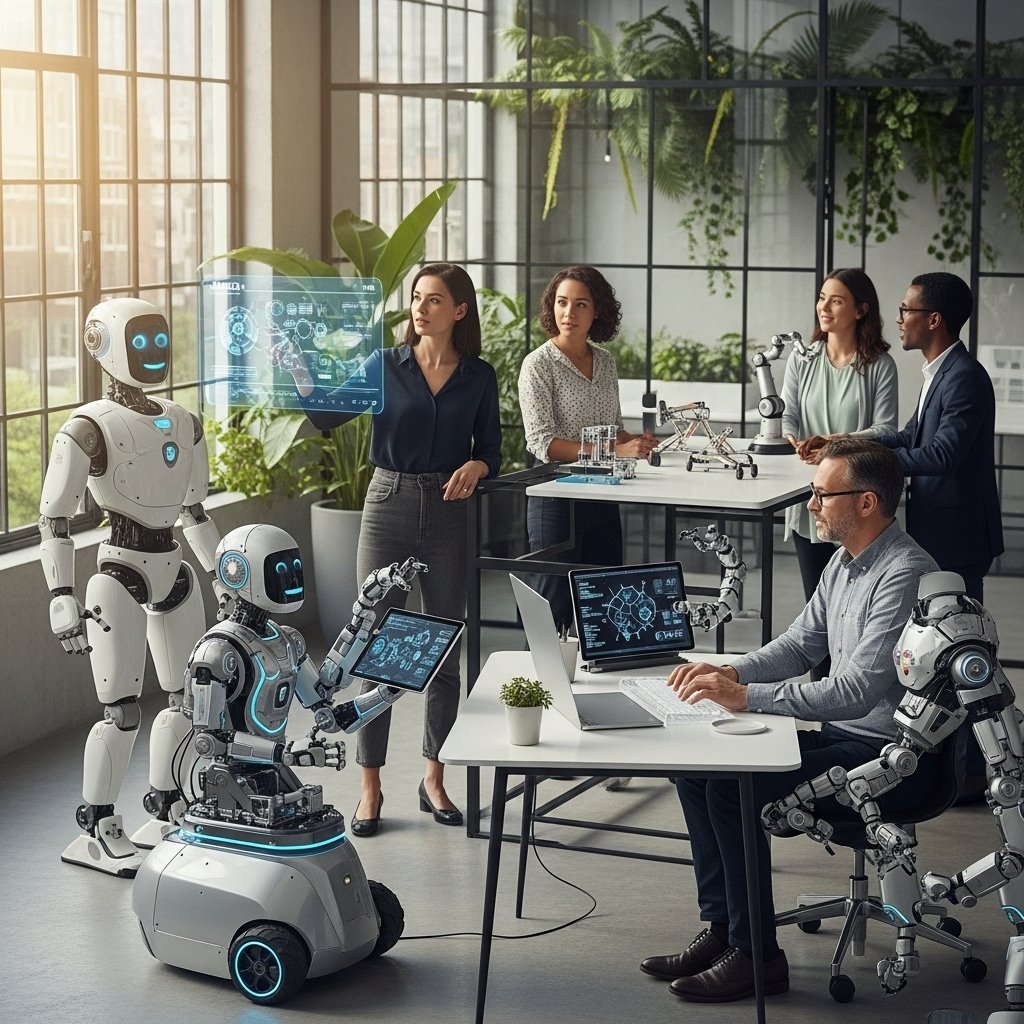
AI’s most profound impact is a fundamental shift from pure automation to human-AI augmentation. For example, AI-powered coding assistants have boosted developer efficiency by 10% to 20% at JPMorgan Chase, and the company plans to expand AI use to over 1,000 cases by 2026. The company has also seen AI contribute to over $1.5 billion in fraud prevention savings. This demonstrates that AI’s primary value proposition lies in its ability to enable employees to be more creative, strategic, and productive.
The Strategic Pivot: From Headcount to Capabilities
The advent of AI marks a pivotal moment for a clear distinction in HR: workforce management vs. workforce planning.
- Workforce Management (WFM) is an operational function focused on the day-to-day administration of human capital, such as managing people data, tracking open roles, and aligning workforce costs. AI has become essential for streamlining these processes, automating tedious administrative tasks like resume screening and interview scheduling.
- Workforce Planning (WP) is a proactive, strategic discipline that looks ahead to future talent needs. The process ensures the correct number of people with the right skills are employed at the right time to deliver on both short- and long-term business objectives.
By offloading the “how” of workforce management, AI is forcing HR professionals to elevate their role and focus on the strategic “why” and “what” of workforce planning. A key part of this strategic shift is the transition to a skills-based organization (SBO) model. An SBO is a workforce framework that prioritizes individual skills and capabilities over rigid job roles, seeing employees as a collection of valuable skills that can be strategically deployed across the organization.
This model helps organizations adapt quickly to changing market demands by aligning tasks with the specific skills of their people. It’s a move away from static, departmental teams toward dynamic, project-based assignments where teams are formed based on the specific skills required for a task, ensuring the right talent is deployed at the right time.
The Toolkit for the Future-Ready Enterprise
A core function of strategic workforce planning is to evaluate the future state of skills and experiences that will be needed to meet business objectives. This is achieved through a skills gap analysis, a strategic process that measures the difference between a company’s current capabilities and the skills and competencies needed to meet its long-term goals.
In an AI-augmented environment, this process is more sophisticated and data-driven than ever before. AI-powered analytics now make it possible to catalog employee skills at scale, run precise gap analyses, and benchmark against competitors. These systems can process massive amounts of data from resumes, social media, and internal performance metrics to provide a comprehensive, up-to-date skills inventory in minutes, not weeks. This rapid analysis enables organizations to maintain a dynamic skills map of their entire workforce.
The insights gained from this analysis empower organizations to make better, more informed talent decisions. For example, a company can identify existing generalist software developers with strong potential for upskilling and then build a plan to train them in a specific new technology like cryptography. This is more cost-effective than purely buying talent from a competitive external market.
The Critical Partnership: Talent Acquisition as a Force Multiplier
A strategic talent acquisition function is inextricably linked to workforce planning. While workforce planning identifies future needs, talent acquisition is the exclusive function responsible for executing the “buy” strategy—acquiring external talent.
AI is transforming this function from a reactive process to a proactive strategy. By automating manual, repetitive tasks like resume screening, interview scheduling, and data analysis, AI frees up talent acquisition professionals to focus on more strategic, human-centric activities like building relationships with high-potential candidates.
For instance, the global beauty company L’Oréal Group receives 1.5 million job applications each year. To manage this volume while ensuring a high-quality candidate experience, the company uses conversational AI tools to automate up to 95% of the hiring process for deskless teams, freeing recruiters to focus on strategic tasks. This proactive approach reduces hiring costs, decreases time-to-hire, and ensures the organization can secure a competitive advantage.
Mitigating Risk: The Ethical Imperative
The use of AI in HR, particularly in sensitive areas like hiring and talent management, introduces significant ethical and legal challenges. The U.S. Equal Employment Opportunity Commission (EEOC) has made the use of AI in employment decisions a top strategic enforcement priority, signaling a new era of regulatory scrutiny.
The primary ethical risks include:
- Algorithmic Bias: If past hiring data reflects historical biases—for example, favoring male candidates for certain roles—the AI will not only perpetuate but also amplify those same biases. This can lead to discriminatory hiring outcomes, a risk that resulted in Amazon scrapping an AI recruiting tool in 2018.
- The Black Box Problem: Many AI systems operate as a “black box,” making decisions without providing a clear explanation of how they reached their conclusions. This lack of transparency erodes employee trust and makes it difficult to justify decisions to candidates or regulators.
- Data Privacy: AI relies on massive volumes of data, and in HR, this includes sensitive personal information about employees and candidates. Mishandling this data can lead to breaches and legal liabilities.
Given these risks, ethical AI governance is not a “nice-to-have” but a core risk management strategy. A comprehensive AI governance framework provides a structured approach to managing AI risk, ensuring ethical use, regulatory compliance, and accountability. The framework should be built on four core principles: fairness, transparency, accountability, and privacy.
The Journey Begins Now: Your Action Plan
The unprecedented pace of technological change is not a problem to be solved but a reality to be embraced. The most successful companies will be those that view AI as a catalyst for a fundamental transformation of their workforce strategy.
The future of work is not a binary choice between human workers and automation. It is a new paradigm of human-AI augmentation where a proactive, skills-based approach creates a potent source of competitive advantage.
To start this journey and build an agile, future-proof organization, senior leaders must take action now. Begin by conducting a comprehensive skills inventory to understand the current capabilities of your workforce. From there, define clear future scenarios and secure senior leadership buy-in to formalize workforce planning as a core business discipline. This strategic pivot ensures that talent is not just managed but proactively deployed, developed, and governed to meet the demands of an ever-evolving market.
Leave a Reply