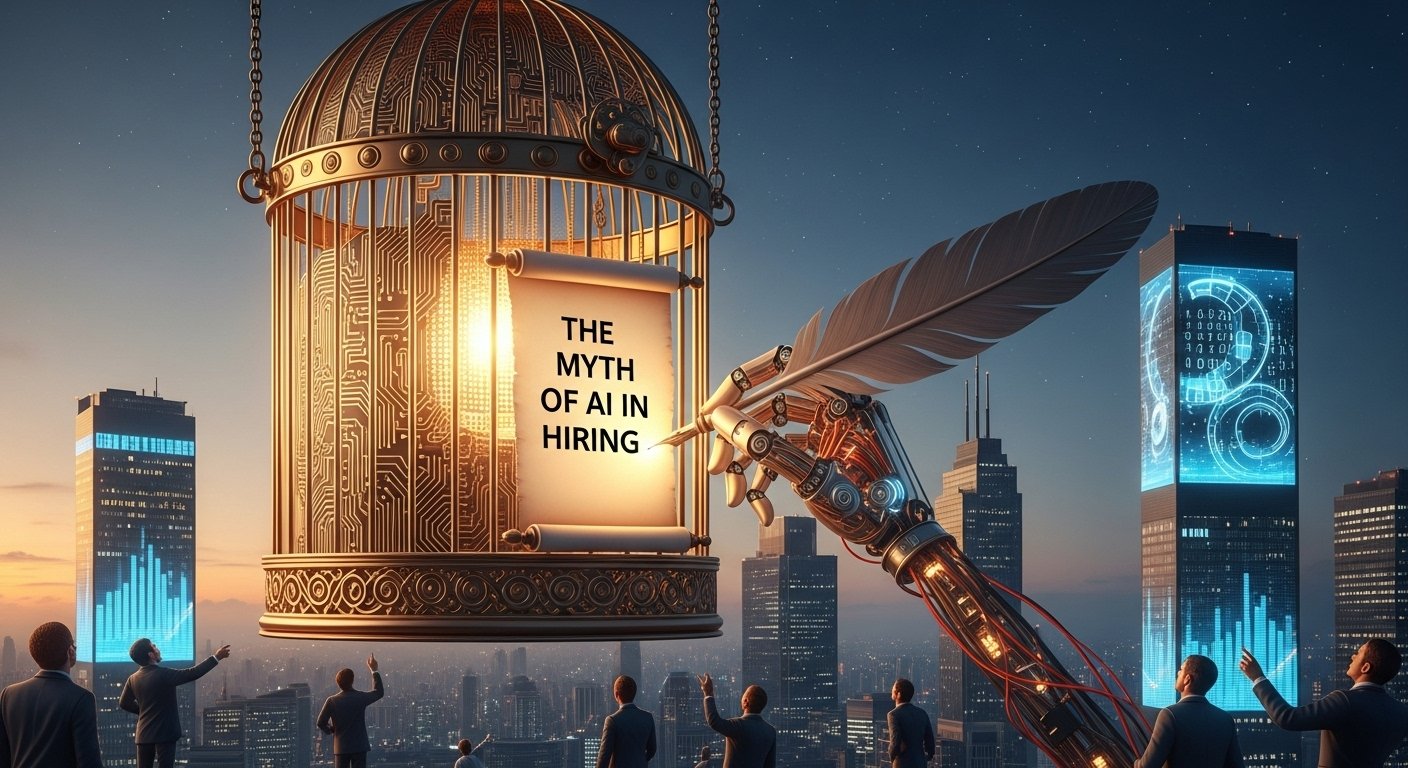
In the world of talent acquisition, Artificial Intelligence is the conversation of the moment. It’s pitched as a silver bullet—a revolutionary force that promises to slash time-to-hire, eliminate unconscious bias, and finally solve our most persistent hiring challenges. The narrative is compelling: AI is the magic potion we’ve been waiting for.
But for seasoned leaders, this promise feels eerily familiar.
This isn’t the first time technology has promised to revolutionize recruiting. The truth is, AI in hiring is not new. Its story is a 50-year evolution, not an overnight revolution. By looking back at this history, we can gain the perspective needed to cut through the hype and make smarter investments today. The lesson from the past is clear: technology has never been a magic potion. It’s a tool, and its success—or failure—has always depended on strategy.
The Original Bottleneck: From Filing Cabinets to the “Resume Black Hole”
Let’s rewind to the 1970s. The biggest problem in recruiting wasn’t a lack of talent; it was an overwhelming amount of paperwork. Recruiters spent the majority of their time manually sorting stacks of resumes that arrived by mail. The first wave of technology, the Applicant Tracking System (ATS), was essentially a “digital filing cabinet.” Its goal was simple: solve the paper problem.
Then came the internet revolution in the 1990s. Job boards like Monster.com created a new, massive business problem: a firehose of digital applications. A single online post could attract hundreds of resumes, making manual review impossible.
This data deluge forced a paradoxical step backward in technological intelligence. The market needed a fast, cheap way to filter the flood, and the solution was the keyword-based ATS. This was the “AI” of its day, but it was notoriously unintelligent. It couldn’t understand context or synonyms, leading to an estimated 75% of qualified candidates being filtered out simply because their resumes lacked the perfect keywords.
This era gave us two frustrating legacies:
- The “Resume Black Hole”: Candidates would submit applications into a void, never to be heard from again.
- “Resume Optimization”: Candidates learned to stuff their resumes with keywords to “beat the bot,” polluting the data pool and making it even harder for recruiters to find genuine talent.
The promise of better outcomes was sacrificed for the sake of managing volume. The technology worked, but the process was broken. The failure wasn’t technological; it was strategic.
Garbage In, Garbage Out: Why AI Can’t Fix a Broken Process
Today, we stand at a similar crossroads. The potential of modern AI is immense, but we are at risk of repeating the same fundamental mistake: believing technology can solve a process problem.
An inefficient, unstructured, or poorly executed recruitment process is a significant financial and cultural liability. A single “bad hire”—often the direct outcome of a flawed process—can cost an organization up to 30% of that employee’s first-year earnings, with some estimates placing the total cost as high as $240,000 when lost productivity and replacement expenses are included.
AI is not a magic potion. It is a powerful amplifier.
If your current hiring process is flawed, AI will not fix it; it will put it on steroids.
- An algorithm trained on biased historical hiring data will only make biased decisions faster and at a greater scale.
- An automated system that creates an impersonal, frustrating experience will alienate top candidates more efficiently.
- A bad process doesn’t just fail to bring in good people; it actively drives existing talent away. When a bad hire underperforms, the burden falls on your top performers, leading to burnout and a “turnover vicious cycle” that pushes your best people out the door.
The candidate experience is the ultimate litmus test of your process. A negative journey—marked by poor communication and a lack of transparency—deters top talent and damages your employer brand. The case of Virgin Media, which lost an estimated $6 million in annual revenue from rejected candidates who were also customers, is definitive proof that your hiring process is a direct, high-stakes touchpoint with the market.
The Path Forward: Strategy Before Software
To turn the promise of AI into reality, leaders must learn the lessons of the past. Achieving better, fairer, and faster hiring requires more than just adopting the latest technology; it demands a human-centric strategy focused on process excellence. Before you invest in another platform, focus on these core principles:
- Prioritize Business Objectives First. Don’t start with the technology you want to use. Start by clearly defining the problem you need to solve. Are you struggling with sourcing, candidate engagement, or inconsistent assessments? A clear diagnosis must precede the prescription.
- Invest in Process and Data Integrity. Your AI is only as good as the process it supports and the data it uses. Before implementing any system, ensure your hiring process is structured, fair, and efficient. Clean your historical data and establish ethical governance. Without a solid foundation, you are building your strategy on sand.
- Augment, Don’t Just Automate. The true power of AI lies in its ability to augment human expertise. Use AI to handle the repetitive, administrative tasks that bog down your team. This frees your human recruiters to focus on what they do best: building relationships, exercising strategic judgment, and making the nuanced decisions that algorithms can’t.
The integration of AI is not a simple technology purchase; it is a fundamental business transformation. There is no magic potion for talent acquisition, and there never will be. The real solution is a thoughtful strategy that leverages technology to empower people, not replace them. The ultimate competitive advantage won’t be found in having the smartest AI, but in seamlessly blending its power with an empathetic, strategic, and genuinely human approach to hiring.
Leave a Reply